There is a wonderful website where you can find lots of book on English for free that you can enjoy.
Books can make you travel sol around the Universe and time.
Enjoy this great oportunity.
https://www.oxfordowl.co.uk/for-home/find-a-book/library-page/
Mostrando entradas con la etiqueta 6º. Mostrar todas las entradas
Mostrando entradas con la etiqueta 6º. Mostrar todas las entradas
sábado, 14 de marzo de 2020

lunes, 16 de diciembre de 2019
It's Xmas time!
Our friend Mr. Bean wants to wish you a jolly merry Christmas with one of his videos. Enjoy!
Here are some Xmas games and activities to check vocabulary. Have fun!
Memory1 - Memory2 - Wordsearch -
Super Simple Website - BBC Christmas collection -
MES Games - A dificult Christmas Quiz -
Santa's Flight - Coin collection - Throw decorations! -
Make groups - Find it! -
MES Games - A dificult Christmas Quiz -
Santa's Flight - Coin collection - Throw decorations! -
Make groups - Find it! -

jueves, 9 de mayo de 2019

lunes, 6 de mayo de 2019
Vocabulary: What do you want to be when you grow up?
I want to be a...
Learn and revise what you know about jobs and occupations with these fabulous activities and games.
Learn and revise what you know about jobs and occupations with these fabulous activities and games.
Let's play!
Picture and sound dictionary - Wheel of fortune
When I grow up Story - Car racing
Pirates - Jeopardy- Memory
Picture and sound dictionary - Wheel of fortune
When I grow up Story - Car racing
Pirates - Jeopardy- Memory
jueves, 11 de abril de 2019
Cooking recipes
New project coming!
Here are some videos and examples to provide you some interesting ideas for your project. You can also try new recipes from these videos, you might find a new favourite dish!
Here you will find salty, bitter and sweet recipes. Even for vegetarians!
I can't wait to see your projects.
Here are some videos and examples to provide you some interesting ideas for your project. You can also try new recipes from these videos, you might find a new favourite dish!
Here you will find salty, bitter and sweet recipes. Even for vegetarians!
I can't wait to see your projects.
viernes, 15 de marzo de 2019
Rooftops 6 Unit 5: At the Market
When we talk about objects, food, drinks, etc. there is something we should consider: Is it countable or uncountable?
But... What is "countable"?
COUNTABLE is an noun that we can count: Three dogs, eighty books, seven dwarves... "dogs", "books" and "dwarves" are countable nouns.
UNCOUNTABLE is a noun that we cannot count. "Seven money", "four water" are terrible mistakes😱 (we cannot count 'moneys' or 'waters').
We can, however, say "seven euros" or "four water bottles". By using more nouns we can turn an uncountable noun into a countable one.


Let's sum up this lesson with your favourite part; GAMES!
But... What is "countable"?
COUNTABLE is an noun that we can count: Three dogs, eighty books, seven dwarves... "dogs", "books" and "dwarves" are countable nouns.
UNCOUNTABLE is a noun that we cannot count. "Seven money", "four water" are terrible mistakes😱 (we cannot count 'moneys' or 'waters').
We can, however, say "seven euros" or "four water bottles". By using more nouns we can turn an uncountable noun into a countable one.
We don't use these nouns in an isolated way. We usually need to use A/AN, SOME and ANY but... do you know when to use them appropriately? Here's a video to help you with that:
And, we also use 'How much' and 'How many' with countables and uncountables.


Countable or uncountable? 1, 2 - Quizizz 1, 2
Test - Uncountables - Moonshot - Food
Fun Fair Quiz - Car Race - Much, many, too... -
Aliens, Pirates & Crocodiles - Mix
A, some, any - Dragon bite (for experts!)
Food Kangaroo - Baker game
Test - Uncountables - Moonshot - Food
Fun Fair Quiz - Car Race - Much, many, too... -
Aliens, Pirates & Crocodiles - Mix
A, some, any - Dragon bite (for experts!)
Food Kangaroo - Baker game
jueves, 7 de marzo de 2019
Typing practice!
Look at your keyboard:


It was designed to use both hands to type. Do you type using two fingers? You can do it better! Faster typers use 10 fingers .
You may find it difficult at the beggining - using all your fingers is something new! - but you will improve.
Here are some websites and games to help you mastering your typing. Give them a try!
viernes, 8 de febrero de 2019
Comparative and Superlative adjectives
Add ‘-er’ and ‘-est’ for one syllable adjectives.
one syllable: small – smaller – the smallest
two syllables with ‘y’: happy – happier – the happiest
two+ syllables: beautiful – more beautiful – the most beautiful
Be careful!
Some adjectives work in a different way. We call them 'irregular adjectives':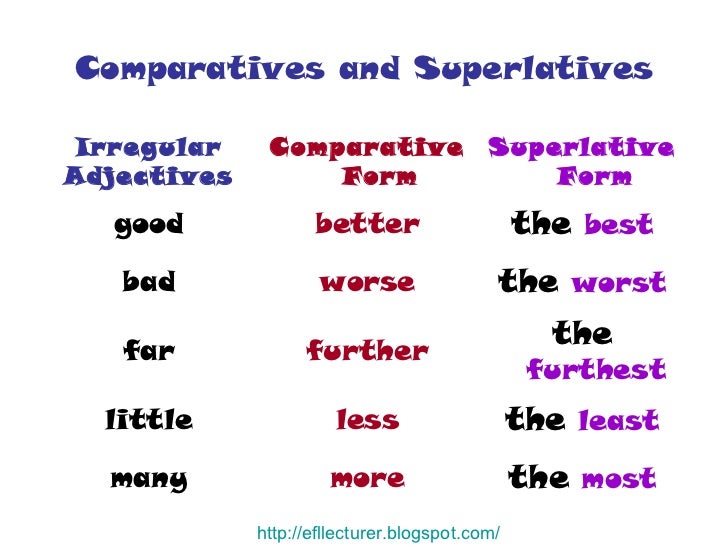
Now you can have fun practising comparatives and superlatives with these games (NEW GAMES UPDATED!)
Let's play!
lunes, 4 de febrero de 2019
Songs with comparatives and superlatives
Enjoy!
Daft Punk - Harder, better, faster, stronger.
Des'ree - You gotta be
Christina Aguilera - Fighter
And here's a compilation of many songs that contain comparatives and superlatives.
comparatives from Luiz Otávio Barros on Vimeo.
Daft Punk - Harder, better, faster, stronger.
Des'ree - You gotta be
Christina Aguilera - Fighter
And here's a compilation of many songs that contain comparatives and superlatives.
comparatives from Luiz Otávio Barros on Vimeo.
viernes, 18 de enero de 2019
Family Tree
Our students are working hard and creating fabulous family trees to learn about families.
Here is a collection of some of their notebooks.
Take a look and enjoy!

Here is a collection of some of their notebooks.
Take a look and enjoy!
>>FAMILY TREES<<

jueves, 10 de enero de 2019
Rooftops 6 unit 3: At the surprise party
Here are some activities related to the current unit. you can watch the videos, practice with Quizlet or play games.
Have fun while revising the contents :)
Have fun while revising the contents :)
lunes, 17 de diciembre de 2018

miércoles, 5 de diciembre de 2018
Irregular Verbs
When we need to speak about past events or tell a story, we usually need to use verbs in the past tense.
Regular verbs are easy to write in the past form but irregular verbs are a complete different story. We need help to learn and study these irregular verbs and here you have some fun games and activities to make it easier.
Hope you like them!
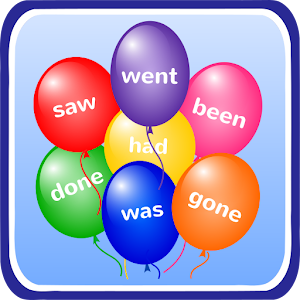
Regular verbs are easy to write in the past form but irregular verbs are a complete different story. We need help to learn and study these irregular verbs and here you have some fun games and activities to make it easier.
Hope you like them!
Let's play!
Hangman - Jeopardy - Sentence Monkey - Memory
Snakes and ladders - Test - Speedwords - Matching game
Bradley's game - Penalty Shoot - Drag and drop
Jigsaw 1 2 3 4 5
Snakes and ladders - Test - Speedwords - Matching game
Bradley's game - Penalty Shoot - Drag and drop
Jigsaw 1 2 3 4 5
viernes, 16 de noviembre de 2018
Grammar review: Past Simple
We use the Past Simple tense to speak about things that happened in the past and now are finished. Here's a summary on how this tense works:

And here's the website with further explanation and games : PAST SIMPLE
As usual, here you can practice and learn about the simple past with your favourite games:

You can see an interesting video from the British Council that you can watch and enjoy here:
As usual, here you can practice and learn about the simple past with your favourite games:
Match - Jeopardy - Mix - Complete the sentence
viernes, 26 de octubre de 2018
Halloween
Mr Bean and horror films.
Mr Bean is a British and very funny character and although he doesn't speak we can communicate perfectly.
Here are some great games to enjoy Halloween to the maximum! Choose your level and have fun!
Mr Bean is a British and very funny character and although he doesn't speak we can communicate perfectly.
Here are some great games to enjoy Halloween to the maximum! Choose your level and have fun!
3rd grade
5th and 6th grades

jueves, 25 de octubre de 2018
Numbers, numbers everywhere!
Let's review the numbers - both ordinal and cardinal - and how to write the dates correctly in English


martes, 16 de octubre de 2018
Grammar review: Present Continuous
We use the present simple to talk about routines – what you do every day or every week. We use the present continuous to talk about things you are doing now.
Examples:I watch cartoons every day.
I’m watching a film now.
I’m watching a film now.
For the Present Continuous, use the verb 'TO BE' in simple present and add '-ing' to the verb.
To make the negative, we add 'not'.


Let's practice!
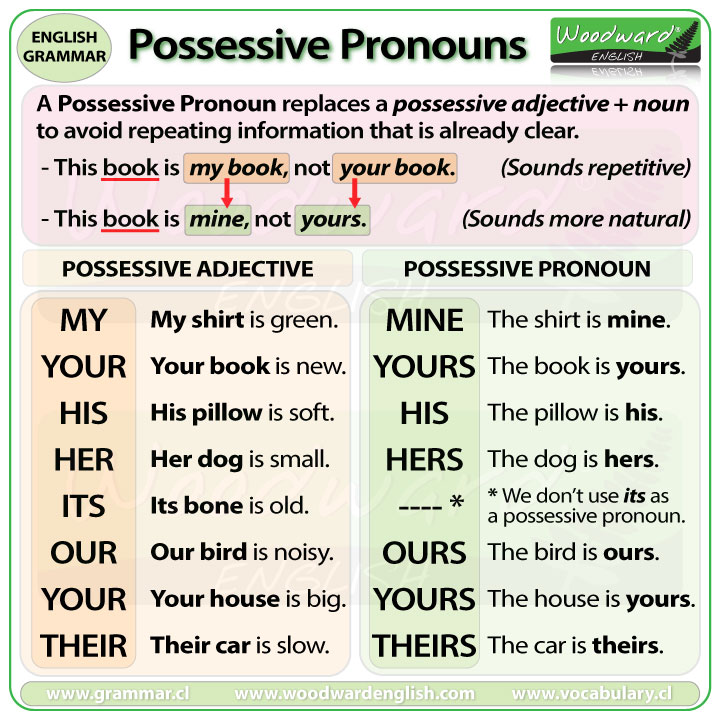
Possessives
Whose blog is this?
It's yours!
Well, but I take part too, so...
It's ours!
Enjoy!
Suscribirse a:
Entradas (Atom)